Why Corrective Exercises are the Secret to Lasting Relief
When most people think of a visit to the chiropractor, they envision a satisfying spinal adjustment that restores mobility and eases a pinched nerve, and for the most part, that is true. However, while the adjustment is a vital foundation for healing, it is often only one half of the equation.
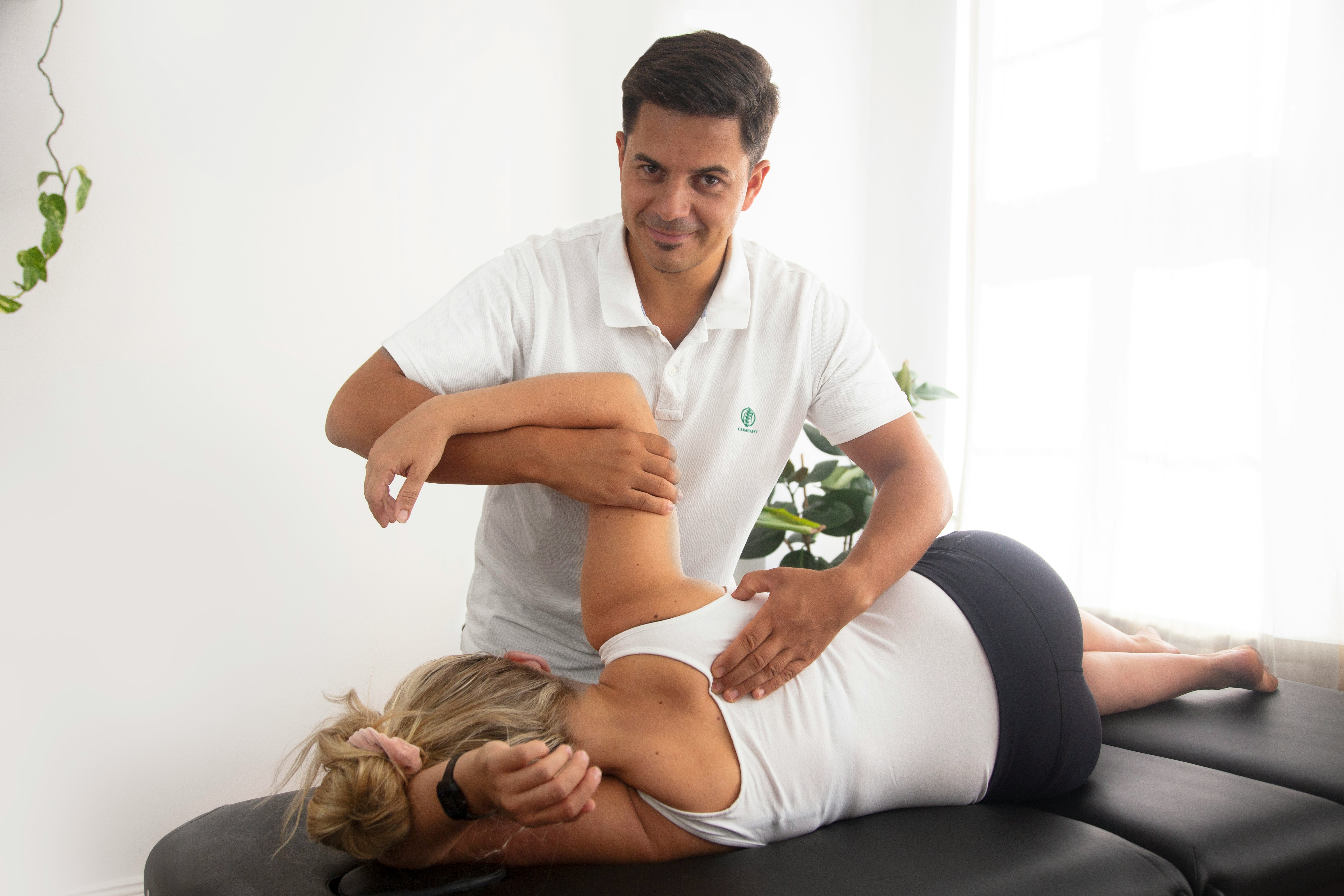
To achieve long-term wellness, many modern chiropractic clinics have integrated Physical Therapy principles into their treatment plans, specifically through the use of corrective exercises. These targeted movements ensure that the relief you feel on the table actually follows you out the door and into your daily life.
What Are Corrective Exercises?
Corrective exercises are specific, non-impact movements designed to address muscle imbalances, postural issues, and movement dysfunctions. By incorporating elements of Physical Therapy, corrective exercises retrain the body to support the spine correctly. They focus on:
Strengthening underactive muscles (like the deep core or glutes).
Stretching overactive, tight muscles (like the chest or hip flexors).
Improving Proprioception, which is your body’s internal sense of its position in space.
These are often simple exercises that take only a few minutes out of your day, but can do wonders for your health in the long run.
How Exercise Extends the Effects of Healing
The primary goal of chiropractic care is to remove interference from the nervous system by aligning the vertebrae. But the body is a creature of habit. If you spend eight hours a day hunched over a laptop, your muscles "memorize" that slumped position.
Without corrective movement, your muscles will physically pull your spine back into its old, painful patterns shortly after an adjustment. Integrating Physical Therapy techniques allows patients to break this cycle. By strengthening the "postural anchors," you provide your spine with the internal scaffolding it needs to maintain its alignment for weeks rather than days.
Furthermore, adjustments open up a joint's range of motion, but exercise teaches you how to use that new range safely. This synergy prevents future injuries by ensuring that your body moves fluidly and efficiently during exercise or daily chores.
Active vs. Passive Recovery
There is a major difference between passive recovery (having something done to you, like an adjustment or massage) and active recovery (doing something yourself, like corrective stretches).
While passive care provides immediate pain relief and restores joint function, active care is what builds resilience. Patients who take an active role in their recovery through Physical Therapy exercises typically see faster results and require fewer "emergency" visits for acute pain. They transition from a state of simply "fixing" a problem to proactively "optimizing" their health.
Small Movements, Big Impact
The beauty of corrective exercise is that it doesn’t require a gym membership or hours of sweat. Often, it involves subtle movements, like chin tucks to fix "tech neck" or pelvic tilts to stabilize the lower back, that can be done in a living room.
When paired with regular chiropractic adjustments, these movements ensure that your body isn't just healing; it's evolving. By addressing the soft tissue and the skeletal system simultaneously, you are building a stronger, more balanced version of yourself.