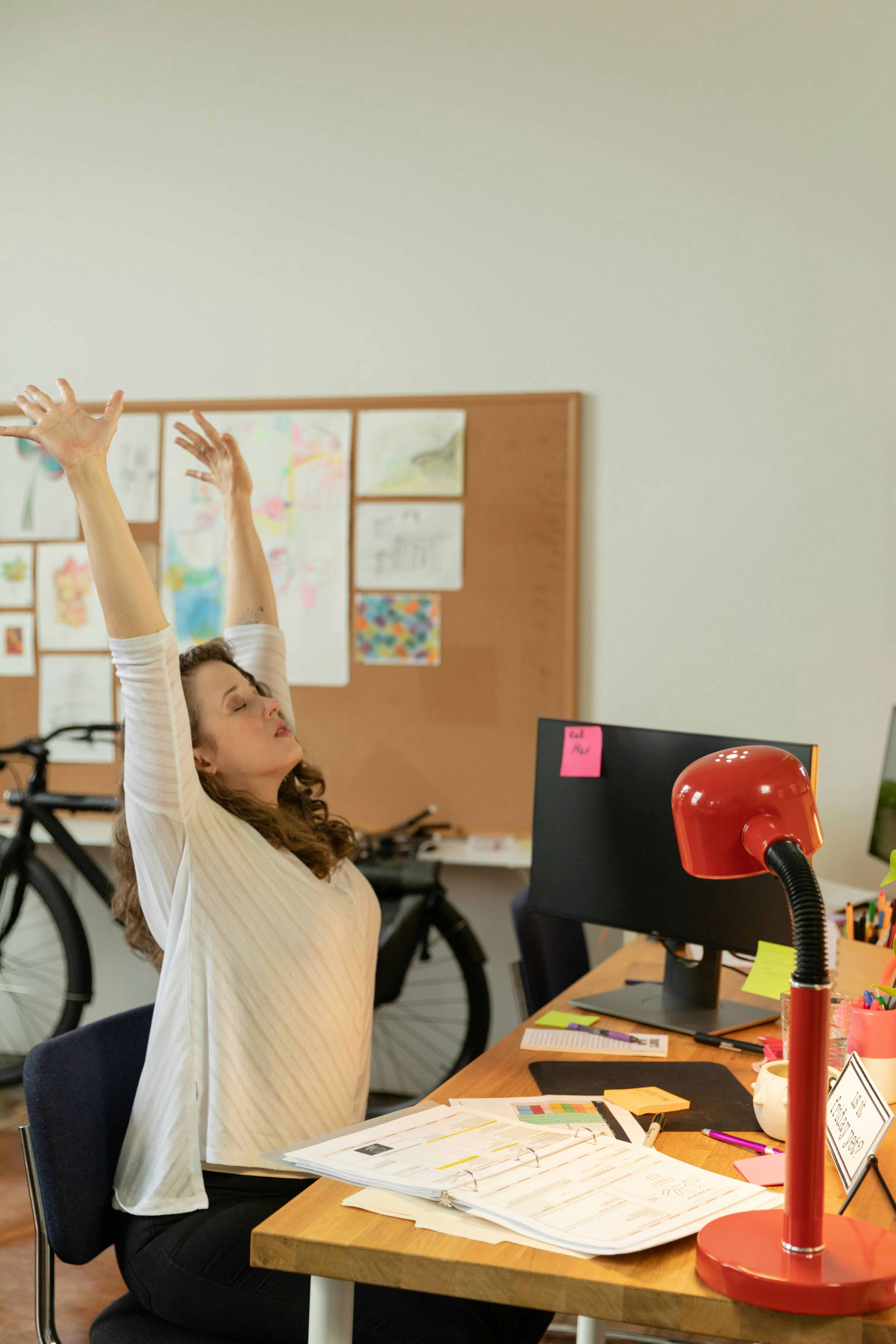
Three Chiropractic Stretches to Get You Through Your Day
We’ve all been there: you're in the office and your neck feels like it’s made of concrete, while your lower back is humming with a dull, persistent ache. Long hours tethered to a desk aren't just mentally draining; they are physically taxing on your skeletal system.
When we sit for prolonged periods, our posture often collapses into a "C" shape, putting immense pressure on the spinal columns. If left unaddressed, this chronic compression can lead to more serious complications, such as a herniated disc, where the soft center of a spinal disk pushes through a crack in the tougher exterior casing.
To help you stay limber and protect your spine, here are three chiropractic-approved stretches designed to counteract the "office slump."
1. The Seated Spinal Twist
This move is perfect for releasing tension in the thoracic spine (middle back). When we sit still, the small muscles around our vertebrae tighten up, which can limit mobility and increase the risk of injury.
How to do it: While sitting in your chair, plant your feet flat on the floor. Place your right hand on the outside of your left knee and your left hand on the back of your chair. Gently twist to the left, looking over your shoulder.
Why it works: Rotational movements help "hydrate" the discs by encouraging blood flow. Maintaining this mobility is a proactive way to ensure your spine remains resilient against the structural shifts that contribute to a herniated disc.
2. The Wall Chest Stretch (Doorway Stretch)
Office work often leads to "Upper Crossed Syndrome," where the chest muscles become tight and the back muscles become weak. This pulls your shoulders forward and forces your neck into a stressful jutting position.
How to do it: Stand in a doorway or against a wall corner. Place your forearm against the surface with your elbow at a 90-degree angle (aligned with your shoulder). Lean forward slightly until you feel a deep stretch across your pectoral muscles.
Why it works: By opening up the chest, you take the "pull" off your upper back. This alignment keeps your head centered over your shoulders, reducing the mechanical stress on the cervical spine.
3. The Seated Figure-Four (Piriformis Stretch)
Lower back soreness often originates in the hips. When your hip flexors and glutes are locked in a seated position for hours, they pull on the pelvis, which in turn tugs on the lumbar spine.
How to do it: While seated, cross your right ankle over your left knee. Keep your back straight and gently lean forward from the hips. You should feel a deep stretch in your right glute and hip.
Why it works: This stretch targets the piriformis muscle. Keeping the pelvic region flexible is essential; when these muscles are chronically tight, they can exacerbate nerve pain or contribute to the uneven pressure that leads to a herniated disc in the lower back.
Listen to Your Body
The goal of these stretches is mild tension, never sharp pain. Incorporating these movements into your daily routine can significantly reduce the wear and tear on your body.
Remember, while stretching is a fantastic tool for maintenance, persistent or radiating pain should always be evaluated by a professional to ensure your spine stays healthy for the long haul.